
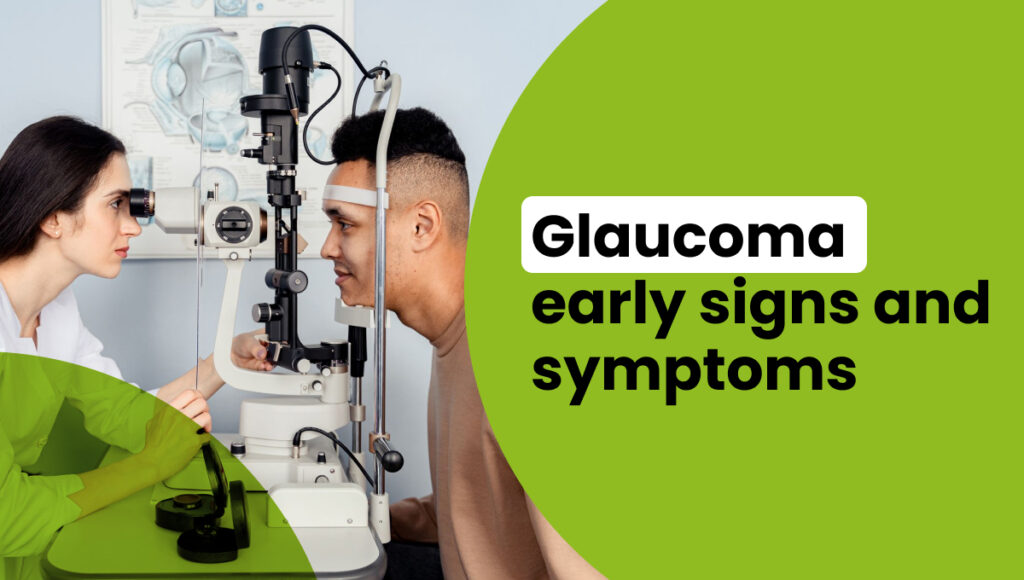
Nearly 300,000 Australians are living with glaucoma right now, and around half of them do not know they have it. Because glaucoma rarely causes pain or noticeable blurring in its early stages, a routine eye test is often the only way to catch it before any vision is lost.
Most people assume an eye problem starts with blurred vision, a headache, or eyes that just feel wrong. Glaucoma is not one of those. It can spend years quietly narrowing your side vision while your central sight stays sharp enough that everything still feels normal, which is exactly why it is called the silent thief of sight.
Since there is often nothing to feel, learning the early signs and symptoms of glaucoma means knowing what subtle changes to look for and understanding what they could mean for your eye health.
What Happens to Your Eyes If You Have Glaucoma
Glaucoma develops when fluid inside the eye cannot drain properly, allowing pressure to build up and slowly damage the optic nerve, the nerve responsible for carrying what you see through to your brain. Once that nerve is damaged, the loss cannot be reversed, which is why timing matters so much. The most common type in Australia is the open-angle glaucoma. It develops slowly over time. It can start by affecting small areas of your side vision, often without you realising, even before any clear symptoms of glaucoma show up.
Early Signs and Symptoms of Glaucoma to Watch For
Keep an eye out for the following:
- Small blind spots or patchy areas in your peripheral vision that are easy to miss at first.
- Needing more light than usual to read or see clearly.
- Bumping into objects or furniture on one side more often than the other.
- Struggling to adjust when moving from a bright room into a dim one.
- Frequent changes to your glasses prescription without a clear reason.
None of these changes feel dramatic on their own, and that is the problem. Peripheral vision is not something most of us monitor closely, so the earliest signs and symptoms of glaucoma can go unnoticed for years.
When Symptoms of Glaucoma Become a Medical Emergency
Acute angle-closure glaucoma behaves very differently, and it needs immediate attention. Unlike the slow creep of open-angle glaucoma, this type can develop within hours. Seek urgent care if you notice the following:
- Sudden, severe pain in or around one eye.
- A red, watery eye that comes on quickly.
- Blurred vision or a sudden drop in vision.
- Halos or rainbow rings around lights.
- Nausea or vomiting alongside eye pain or headache.
If you are experiencing these symptoms of glaucoma, do not wait for a scheduled appointment. Go to your nearest emergency department or call triple zero.
Who Is Most at Risk of Developing Glaucoma
Glaucoma can affect anyone, but some people carry a higher risk of developing it. Watch out for any of the following:
- A close family member has glaucoma.
- You are over 40, with risk continuing to climb with age.
- You are short-sighted or long-sighted.
- You have diabetes, high blood pressure, low blood pressure, or migraines.
- You have used steroid medication over a long period.
- You have had a previous eye injury or eye surgery.
Falling into one or more of these categories does not mean glaucoma is inevitable, but it does mean regular checks matter more for you than for most.
Why Eye Tests Matter More Than Waiting for Symptoms
Signs and symptoms of glaucoma are so easy to miss in the early stages. Waiting to feel something wrong is not a reliable strategy. A comprehensive eye test measures the pressure inside your eye, examines your optic nerve, and can pick up damage well before you would ever notice it yourself. Healthdirect and Optometry Australia both recommend regular eye tests from age 40 onward, with more frequent checks for anyone in a higher risk group.
Clear Vision Optical Can Help
At Clear Vision Optical, checking for the early signs and symptoms of glaucoma is a standard part of every comprehensive eye test. Our optometrists check your eye pressure, examine your optic nerve, and take a retinal photo as part of your assessment, with OCT eye scanning available for a closer look when needed. If we find something that needs monitoring or a specialist opinion, we will set up a review schedule and refer you on, working alongside your GP or ophthalmologist.
If you have a valid Medicare card, your eye test with us is fully bulk billed, so cost is never a reason to put off a check. We are a family owned practice at 130 Blair Street, Dallas
Glaucoma very rarely gives you a clear warning, which is exactly why your next eye test matters more than it might seem. See us here at Clear Vision Optical on (03) 9309 6464, and let us catch what your eyes have been quietly hiding.
