
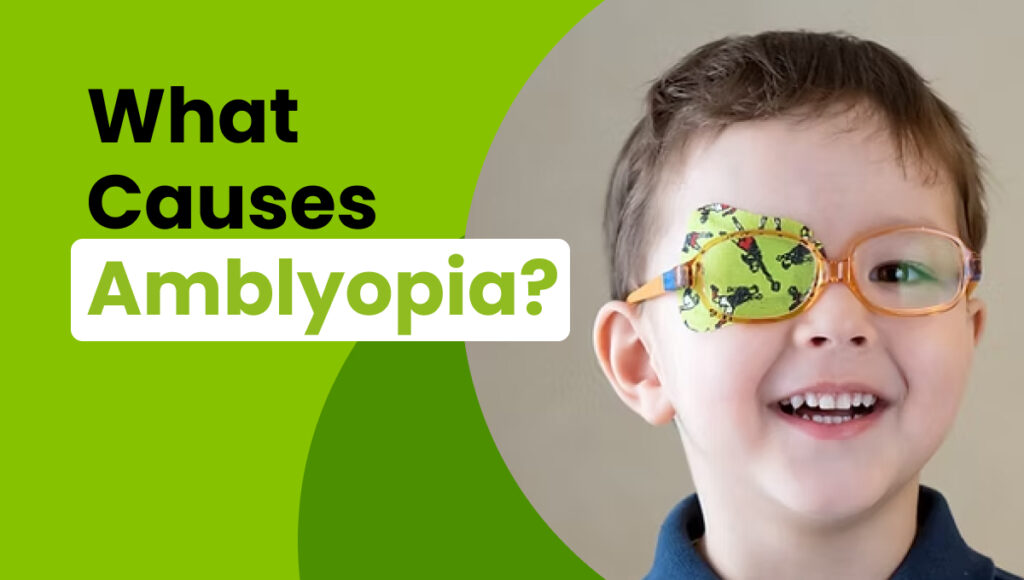
What Is Amblyopia (Lazy Eye)?
Many people call amblyopia a “lazy eye” because one eye seems to work less well than the other. The problem is actually with how the brain processes what the eyes see, not with the eyes themselves. When one eye sends blurry or conflicting images, the brain may start to favour the stronger eye. This can make it harder for the weaker eye to develop properly. This means that finding it early is very important.
The condition usually starts in childhood, before the age of seven, when the visual system is still growing. Without prompt intervention, the weaker eye may never attain its full potential, even with corrective lenses.
What Causes Amblyopia?
There are many things that can cause amblyopia. The outcome is identical, diminished vision in one eye, yet the underlying causes differ, influencing the optimal strategy for amblyopia treatment.
Strabismus - Misaligned Eyes
Strabismus, which means that the eyes are not in the same place, is one of the most common causes of amblyopia. One eye may turn in, out, up, or down while the other stays focused. The brain has a hard time putting together pictures from both eyes, so it starts to ignore the picture from the eye that isn’t lined up right. This will eventually cause a lazy eye.
Early detection of strabismus is crucial, as the brain can frequently reacquire the ability to utilise the weaker eye through appropriate amblyopia treatment, such as eye patching or specialised vision therapy.
Refractive Errors - Eyes Not Focusing the Same
A major difference in refractive errors between the eyes is another common cause. One eye may be more short-sighted, farsighted, or have a higher level of astigmatism than the other. Because of this imbalance, the brain favours the clearer eye, which makes the other eye weaker.
Kids with these refractive differences might not show obvious signs, so parents should look for subtle amblyopia symptoms, like squinting, tilting their heads, or having trouble focusing on things. In these cases, the first step in treating amblyopia is usually to get corrective glasses.
Visual Obstruction – Amblyopia from Lack of Sight
Deprivation amblyopia happens when something physically blocks an eye from seeing clearly. Congenital cataracts, drooping eyelids, or other obstructions can stop the eyes from getting the right amount of visual stimulation, which can cause a lazy eye. Immediate surgical or medical intervention is crucial to avert permanent vision loss.
The affected eye may still need more amblyopia treatment to strengthen its connection to the brain even after the blockage is removed.
Other Things That Can Make You Sick
Genetic or developmental factors make some kids more likely to get amblyopia. Having a family history of amblyopia, being born too early, or having a low birth weight can all make it more likely that you will get an eye condition. It is best to get your eyes checked regularly so that you can catch amblyopia symptoms early and start treatment right away.
Amblyopia Symptoms You Should Look Out For
Recognising the signs of amblyopia early can make a big difference. Some signs may be:
- One eye looks like it’s wandering or not lining up with the other eye.
- Not being able to see depth well or judge distances well.
- Squinting, blinking too much, or tilting the head.
- Staying away from tasks that need clear vision.
A lot of amblyopia symptoms are hard to notice, which is why it’s so important to get regular eye exam from an optometrist.
Ways to Treat Amblyopia
Lenses that fix problems
Prescription glasses or contact lenses can fix problems with how the eye focuses, which helps the weaker eye focus correctly. This is usually the first step in treating amblyopia, especially if the problem is that one eye is not focusing properly.
Eye Patching
Putting a patch over the stronger eye makes the brain depend on the weaker eye. Regular use can greatly help with visual development and is one of the most common ways to treat amblyopia.
Atropine Eye Drops
Options for Surgery or Specialists
Useful Advice for Families
Make sure to have regular eye exams, at least every two years, or sooner if you notice signs of amblyopia.
Watch your child for small signs like squinting, tilting their head, or not being able to coordinate well.
To get the best results, follow the treatment plan your optometrist gives you.
Early attention and intervention can make a huge difference in outcomes, helping kids develop healthy vision and confidence in their daily lives.
Conclusion
Amblyopia, also known as lazy eye, is a condition that happens when the eyes are not lined up correctly, have different refractive properties, have something in the way of vision, or are caused by genetics. To stop permanent vision loss, it’s important to spot the signs of amblyopia early and get the right treatment. Regular eye exams at a professional optometrist, like Clear Vision Optical, can make sure that kids get the care they need to strengthen their weaker eye and help their eyesight grow normally.
